


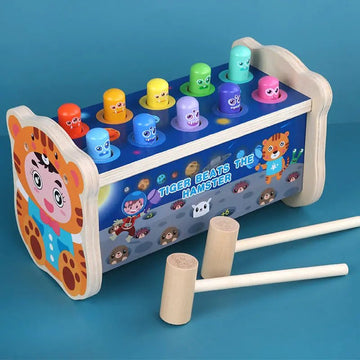
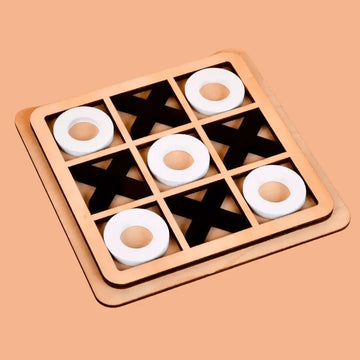
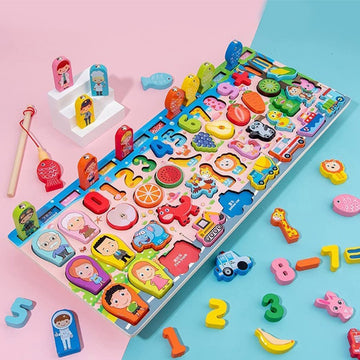


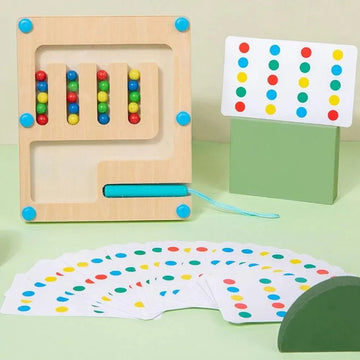


When you walk into a toy store today, you're bombarded with plastic gadgets, flashing lights, and electronic beeps. But if you take a step back and think about what your child actually needs to grow and learn, wooden toys might just be the answer you've been looking for. At MyLittleTales, we believe that the best toys aren't always the flashiest ones – they're the ones that engage a child's imagination and support their natural development. Let's dive into why wooden toys are such powerful tools for learning and growth.
The Magic of Simplicity
There's something beautifully simple about a wooden toy. It doesn't require batteries, it doesn't light up, and it definitely doesn't make annoying sounds. But here's the thing – that simplicity is actually its superpower. When a toy doesn't do everything for your child, your child has to do the thinking. They have to imagine what the toy could be, how it could move, and what story it could tell.
This is where real learning happens. A wooden block isn't just a block – it's a building material, a pretend food item, a car, or a bridge. The possibilities are endless, and that's exactly what develops creativity. When children engage in open-ended play like this, they're exercising their imagination muscles in ways that electronic toys simply can't match.
Cognitive Development Through Play
Wooden toys, especially those designed with Montessori principles in mind, are incredible for cognitive development. Think about stacking blocks – it seems simple, right? But your child is actually learning about balance, spatial awareness, cause and effect, and problem-solving. When a tower falls, they figure out why and try again. That's the foundation of scientific thinking right there.
Puzzles made from wood teach children about shapes, colors, and how pieces fit together. They develop fine motor skills as they manipulate the pieces, and they learn persistence when they keep trying until they get it right. These aren't just fun activities – they're building neural pathways that support mathematical thinking, logical reasoning, and spatial intelligence.
Fine and Gross Motor Skills
One of the most important things wooden toys do is help children develop both fine and gross motor skills. Fine motor skills – the small, precise movements – are developed through activities like threading beads onto wooden strings, manipulating puzzle pieces, or stacking smaller blocks. These skills are essential for everything from writing to eating with utensils.
Gross motor skills – the bigger movements – are developed through toys like wooden push-and-pull toys, balance bikes, or climbing structures. When a toddler pushes a wooden toy across the floor, they're strengthening their legs and improving their balance. When an older child plays with wooden building sets, they're developing coordination and strength.
Sensory Exploration
Wooden toys engage the senses in a way that plastic toys often don't. The texture of wood is warm and natural. It has a subtle smell that's completely different from plastic. When you tap wooden blocks together, they make a pleasant sound – not a jarring electronic beep, but a gentle, natural sound. This sensory richness is actually really important for brain development.
Young children learn about the world through their senses, and wooden toys provide authentic sensory experiences. They're not overstimulating, which means children can focus on the actual play and learning rather than being distracted by flashing lights and loud noises. This calm, focused engagement is perfect for developing concentration and attention span.
Building Confidence and Independence
When children play with wooden toys, they're in control. They decide what to build, how to play, and when they're done. This sense of agency is incredibly important for building confidence and independence. When a child successfully completes a puzzle or builds a tall tower, they've accomplished something real. They did that. Nobody helped them, and no computer told them they won.
This kind of success builds intrinsic motivation – the desire to learn and achieve for the sake of learning and achieving, not for external rewards. Children who develop this kind of confidence are more likely to tackle challenges, try new things, and persist when things get difficult.
Social and Emotional Development
Wooden toys are fantastic for social play too. When children play together with blocks, they learn to cooperate, share, and negotiate. They might argue about whose turn it is or how to build something, but they're learning valuable social skills in the process. They're learning to communicate, compromise, and work toward a common goal.
Playing with wooden toys also provides emotional benefits. The calm, focused nature of wooden toy play can be soothing and stress-relieving. There's no pressure to "win" or "beat the game." Children can play at their own pace, which means they can use play as a way to process emotions and experiences.
Safety and Sustainability
Let's talk about something really important – safety. Wooden toys from reputable makers like MyLittleTales are made from natural materials without harmful chemicals or small parts that could be choking hazards. They're durable and built to last, which means they can be passed down from sibling to sibling or even to the next generation.
This durability also makes wooden toys more sustainable. Instead of buying new plastic toys that break after a few months and end up in landfills, wooden toys can be used for years. They're better for your child, better for your wallet, and better for the planet.
The Montessori Connection
Many of the best wooden toys are designed with Montessori principles in mind. The Montessori approach to education emphasizes self-directed learning, hands-on exploration, and respect for the child's natural development. Wooden toys are perfect for this approach because they encourage children to learn through doing.
A Montessori-inspired wooden toy isn't flashy or complicated. It's designed to teach a specific concept or skill in a way that's accessible to the child. The child can see exactly what they're learning and can repeat the activity as many times as they need to master it. This kind of learning is incredibly effective and deeply satisfying for children.
Choosing the Right Wooden Toys
Not all wooden toys are created equal. When you're shopping for wooden toys, look for toys that are well-made, safe, and open-ended. Avoid toys with small parts if your child is still in the mouthing stage. Look for toys that can be used in multiple ways and that grow with your child.
At MyLittleTales, we carefully select wooden toys that meet these criteria. We focus on quality, safety, and educational value. Our collection includes everything from simple stacking toys for babies to complex building sets for older children. We believe that every child deserves toys that support their development and spark their imagination.
The Bottom Line
Wooden toys might seem old-fashioned in our high-tech world, but they're actually perfectly designed for how children learn and develop. They support cognitive development, motor skills, sensory exploration, and emotional growth. They encourage creativity, independence, and confidence. And they do all of this without batteries, screens, or complicated instructions.
If you're looking to enhance your child's learning and development, wooden toys are an investment that pays dividends. They're not just toys – they're tools for growth, learning, and imagination. So next time you're shopping for toys, skip the plastic and electronics, and reach for something wooden. Your child's development will thank you.


